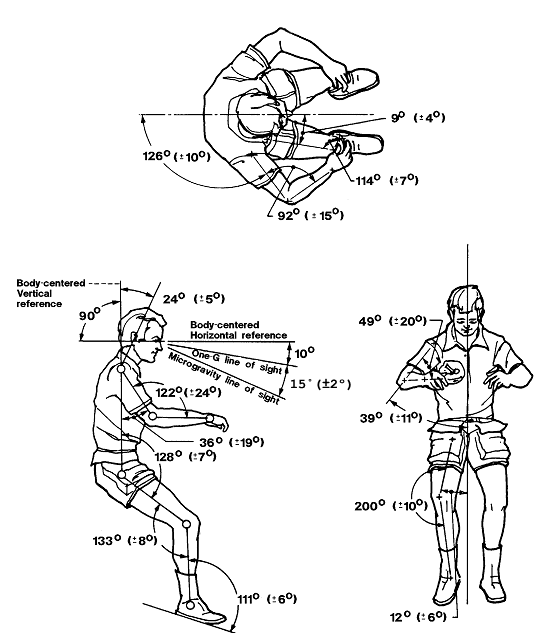
Neutral body posture is the shape the human body settles into when nothing is pushing back. NASA first noticed it in the 1980s, watching astronauts float aboard Skylab. Freed from gravity, the relaxed body does not stand at attention: the arms drift upward, the shoulders open, the hips and knees keep a soft bend, the feet point gently downward. Holding any other position in orbit takes effort. Later missions found that people vary quite a bit — some nearly upright, some pitched forward with deeply bent knees, some long and straight-necked — depending on their build, their fitness, and old injuries. There is no single posture everyone reverts to. (A fuller account is on Wikipedia.)
What makes this worth caring about on the ground is what it reveals about effort. Weightlessness removes the body's need to hold itself up, so the posture that emerges is simply the one that costs the least. Stress on the muscles and joints falls away, pressure on the spine and the diaphragm eases, and the spine settles into its natural curve. Most of what we call bad posture at a desk is a sustained departure from that curve — a head craned forward, a lower back flattened against a hard chair, shoulders creeping up toward the ears. Each departure is a small, continuous tax, paid over eight hours a day.
The practical lesson for any working environment is that the closer you sit to neutral, the less your body is asked to pay. This isn't theoretical: carmakers have already borrowed the research to design more comfortable seats. A well-arranged workstation follows the same logic — it supports the curve of the lower back rather than fighting it, puts the screen where the head can sit over the shoulders rather than ahead of them, and lets the elbows and knees rest at open, comfortable angles. The caveat from those later missions matters, though. Since everyone's neutral is slightly different, the goal isn't one correct posture issued to all. It's enough adjustability for each person to find their own — and the freedom to move in and out of it through the day.